Sunday, 31 January 2021

Dandeli Trip Report 1


Hello friends, hope you and your family are doing good. Amur gave hope and the same is proving to be the best because we now landed in Dandeli to many more migratory and local birds of the land.

Dandeli as a place was pending for a long and finally, we managed to visit thanks to the long weekend, the place is different in terms of the pattern of birding, it has a variety of forest birding as well as hide birding and both are unique and provide lovely amazing opportunities. With two different experience, I have split the trip report into two-part, part 1 is for forest birding, and part 2 will cover hide (Studio) birding.

Today we will take a tour of the forest birding along with a unique stay and food experience, the place is such that one can visit every year either for birding or just for taking a break from stressful routine life. Let us move to the next section to know more about it.

The story begins

To start with let me give you the context of how it started and then we will get into the specialty of part 1. The planning started when we were in Tadoba, we all wanted to have at least one birding trip for this season and Dandeli was pending for a long. Deepa/Suma and I finalized the date but we were skeptical about how to travel whether to take a flight or through Goa or drive. Certainly driving down was the least we wanted to do but it was one of the options. After a lot of discussions we approached our expert Saurabh if he can help us to finalize the plan, coincidentally he too had planed his batch for Dandeli so we joined his batch so the final count came out to be 10 for the trip. 

This is how we started the journey to Dandeli, now let me explain to you what we covered and how we enjoyed each moment. Part 1 is a combination of two things, first definitely birding, and another part is an experience of stay which includes unmatched food at Kadumane Homestay. So first meet lovely birds and then we will visit the food trail.

Hornbill courtship display

As per the plan, our 2 nights were booked at Kadumane homestay at Dandeli, which is rich with the attraction of different types of Hornbills, it is as if Dandeli is home to Hornbills and hence you get an opportunity to capture them with their unique habits. 

One of the best moments is to see the Hornbill courtship display in the air, they are monogamous and known for the display of courtship behavior. During courtship, a male is usually seen chasing a female and gifting her bark of a tree, petals of flowers, or fruits of banyan, peepal, or mulberry to please her. We never had a clue that such a lovely surprise will come our way so beautifully, we were waiting in the open ground for a mud bath activity but we noticed them flying like a fighter plane and we started focusing to capture a flight shot but suddenly the drama started between the pair. It was one of the best parts of our trip, you can have a look at it in the DSLR section to understand it better.

After the display in the air, they started coming down on the ground for dust play, here as the game of passing berries or petals continued, this is the first time we saw so many at one place with their behavioral display. This became one of the best moments for us. Morning and evening were hijacked by hornbills and now it is time to see what night walk has to offer, so let us visit the next section to enter into yet another mind-wobbling experience. (To know Hornbill in details refer to blog on hornbill - https://btwildart.blogspot.com/2018/12/big-bill-hornbill.html?m=1

The Night trail
It was not only day time but the night time is equally fruitful because you get a chance to see some nocturnal species during their active time. Some time night walk looks difficult because of a lot of effort requires in forest birding, walks on uneven ground, running behind birds etc requires a lot of energy and hence at sometimes you avoid night walk assuming there will be no activity and waste of effort. 

Let me tell you that as good as day time night walk is equally rewarding, many species like Owl, flying squirrel, Frogmouth etc gives good opportunity in the night instead of day time. During our night walk, we got flying squirrel and frogmouth along with tunnel spider, frog. Giant squirrel added with idea of ghost shoot by Esmile Sir. (see my pic in DSLR section)

I am sure most of you are unaware of a flying squirrel or a giant squirrel, you must be thinking squirrel what you have seen is small in size why it is giant and is it true that it can fly. The answer is yes squirrels are of different types; giant squirrel is giant in size and prefers to stay on the tree. Similarly, a flying squirrel is grayish in color and is similar in size to a giant squirrel.

To add more about flying behavior, they are not capable of flight in the same way as birds or bats but are able to glide from one tree to another with the aid of a patagium, a furry, parachute-like membrane that stretches from wrist to ankle. The name flying squirrel comes from the habit of gliding from one place to another. It is difficult to sight because they are active only during the night, Prathamesh tried hard for us to find this lucky species and got success as well. We were following the move of it and finally, it took glide from a tree to ground to run away from us, trust me it was a mesmerizing event to see squirrel gliding like this. The two back-to-back events hornbill and flying squirrel were truly amazing and will be remembered for life long.

Its century 

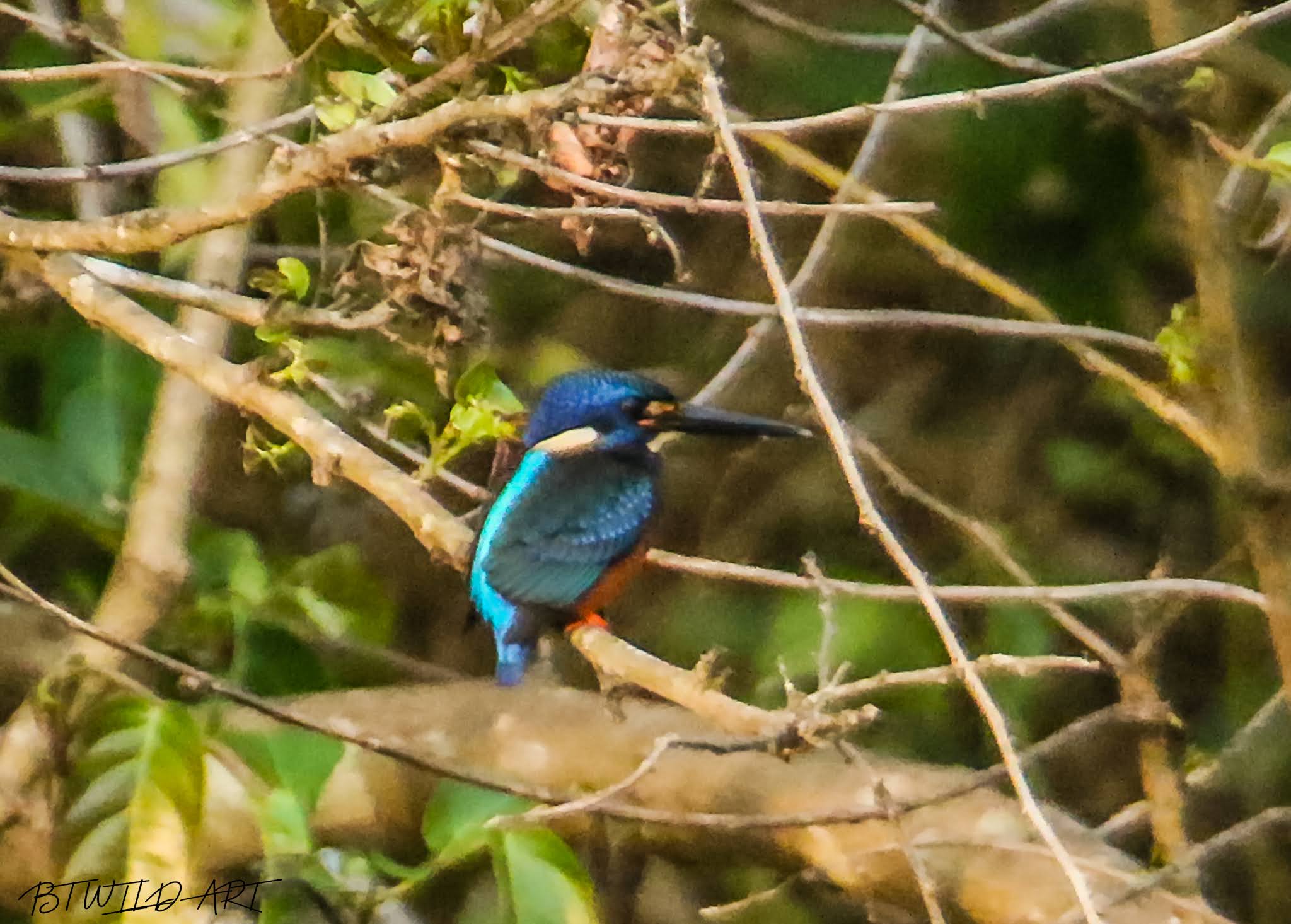
The total count of the trip is around 127 out of which around 50 would be part of phase 1, some of them are  - Blue-eared Kingfisher,  tunnel spider, frog, frogmouth, woodpecker, Green bee-eater, jungle owlet, velvet-fronted nuthatch, Malabar Pied Hornbill, giant squirrel, flying squirrel, Sunbird, Minivet, and many more. You know what for doing so much of walk you need really good food and comfortable stay both this wish was fulfilled by Kadumane homestay so it is important to know about the specialty of Kadumane (offered by Mr. Narimha) so let us move to the next section to eat yummy food. 

Kadumane Homestay

Kadu means Forest Mane means Home (Forest Home)
Our couple of days stay was planned at Kadumane, we reached around 3 pm we were very hungry and were expecting good food. The moment we reached we were welcome with organic kokum drink and then they served proper lunch. It was simple lunch but the taste was yummy and out of the world.

The next day in breakfast we banana bun with missal was amazing I would say “1 Number” this cannot be described in words, please check the DSLR section for pics. This was not the only dish, each and every item served during the stay was just out of the world, be it Organic herbal tea, kokum drink, buttermilk, herbal water (with sabza), Idly with vitamin leaf, Medu Wada sambar, 5 types of pickles, different vegetables, dal, rice, etc. Over and above service and hospitality of Rohan and Narsimhaji were too good, they treated us as we are family that made our stay memorable and comfortable. Cottages were neat and clean added with all required facilities. After two days of lovely days, we moved to Old Magazine House (Ganeshgudi) for studio birding, will share details in part 2. Till the time you enjoy part 1 with amazing photos. 

I hope you liked this blog, keep blessing and keep motivating me to deliver unique stuff, do let me know your feedback on btwildart@gmail.om

Vote of Thanks

Mumbai Travelers and Team – Many thanks, Saurabh, Jogi, and Pathamesh for managing the tour so smoothly, you guys are rocking, keep it up. 

Co-Travelers  - Many thanks to all of you, it wonderful to have all as part of my memory book.

Hotel stay – Part 1 of the journey was placed at Kadumane Homestay  - 5 out of 5, Many thanks to Rohan and Narshimha sir.

Naturalist – Rajni Rao, your knowledge of birds and their habits is outstanding, many thanks for your knowledge sharing and arranging for Hornbill display sightings. 


BT Wild Art

DSLR Section


Sunday, 3 January 2021

Migratory Master Amur


Hello lovely readers, wishing you and your family a very happy new year, let’s hope 2021 brings back a lot of joy and happiness in our lives. The mission for 2021 should be “Do everything in 2021 which got missed in 2020”

I am very much optimistic in terms of achieving everything in 2021 because the year started with the great news of the arrival of Amur Falcon to Lonavala (Favorite hill station for Mumbaikars). Arrival of Amur Falcon in such a near place is really interesting for birders and photography lovers because else it requires long travel. I know you may not want to travel at this point in time so let me take you to the world of Amur Falcon through this blog.

Amur bhag jayega J

The news of the arrival of Amur Falcon got viral more than the spread of the virus, people wanted some reason to travel, and this news came like a god gift. Even on weekdays numbers of vehicles were more than 30 with human count crossing around 100. Considering the busy schedule with no choice, we had to wait for Saturday with fear that with so much disturbance “Amur Bhag Jayega.” I cannot let go of such a unique species for myself as well as for you and hence I approached Deepa (the expert) to give me a company to meet Falcon. after discussion Deepa and I decided to go on Saturday and try our luck to meet Falcon. This is the same place where last season lesser Kestrel was a star, and this time Falcon is leading the show. 

With so much excitement and fear of Vishnu Vani somehow managed to reach the place after having yummy Dosa and Vada at the oldest and famous Kamat restaurant. The moment we reached, we were lucky to sight female of Amur falcon very close to us, it released our stress of sighting, and we started enjoying various positions like on eye level, on perch, on stone, on top of tree or hovering. All the different expressions and styles we could capture but we missed Kestrel’s presence. The mission got accomplished as against Vishnu Vani but the location details were shared by him so we have to appreciate his help. So now you know how we reached its time to move to the next section to understand why this bird is called the master of migration in the next section.  

Migration specialist

Amur falcons are known to cover one of the longest migration routes among all birds. For birds who travel such a great distance to survive, anything less than admiration and respect is unacceptable. 

The Amur Falcon is a fascinating migratory raptor. Every year, the small, resilient birds make the daring voyage from breeding grounds in Russia and China to winter in southern Africa. It is believed that the falcons cross the Arabian Sea during their migration, but much is still unknown about the patterns of their estimated 22,000 km migration. Because of the long journey, stopover sites are important for Amur Falcons to maintain stamina 

They visit India while doing so. This migration happens in large number and the sheer size of the flock makes it a great spectacle, something every wildlife enthusiast must witness at least once in their lifetime. Fortunately, for us, these handsome falcons make a stopover in India, particularly in Nagaland and parts of Manipur and Assam before taking off for the most arduous part of their migration route--flying over the Arabian Sea to finally winter in South Africa. Travel to different countries crossing Arabian sea for such a small size of the bird is unique in itself hence it is champion of migration

Qualities are not only restricted to migration, there many more we should look at it as well, let us move to the next section for fantastic facts

Fantastic facts

The Amur falcons feed mostly on insects, mainly mid-air. Their migration to Africa coincides with the time when due to rains swarm of insects will be everywhere, making South Africa a great feeding ground 

Their timing is impeccable; their flight over the Arabian Sea coincides with the dragonfly migration, which is also their greatest food source during the most arduous phase of their journey

In Nagaland, the spotting would be an understatement when we speak of Amur falcons. The nature of their flocking is nothing short of a great show. In millions, they come visit-starting mid-October until early November

Males are characteristically dark sooty grey above with Rufus thighs and vent. In-flight, the wing lining is white, contrasting with the dark wing feathers. Females can be more difficult to identify as they share a pattern common to many falcons but are distinctive in having an orange eye-ring, a red cere, and reddish-orange feet. Juveniles can be confused only with those of the red-footed falcon, but lack the Buffy underwing coverts

The Amur falcon was long considered a subspecies or morph of the red-footed falcon, but it is nowadays considered distinct. Nonetheless, it is the red-footed falcon's closest relative; their relationship to other falcons is more enigmatic

The Amur falcon feeds mainly late in the evening or early in the morning capturing a wide range of insects in the air or on the ground. They capture most of their prey in flight, sometimes by hovering, but will also pick prey by alighting on the ground

After knowing the fantastic details the time is to know one of the events that happened in 2012 which turned out to be eye opener towards conservation which is captured in the next section, let's see how and why Nagaland is Falcon Capital

Nagaland - Falcon Capital  

In 2012 an estimated 120,000 to 140,000 birds were trapped in nets and killed while passing through a remote part of the Indian Nagaland region. This prompted a swift response from the Indian Government and the Nagaland Forest Department, which used patrols and education initiatives for villagers as a means to halt trapping. In 2013, no falcons were trapped

This was exactly what inspired the conservation workers to spread the importance of conserving these birds and give them a temporary safe house before they make the much longer onward journey. Pangi village in Nagaland has now become the world's Amur Falcon capital and has put Nagaland on the world map, for all the right reasons

I hope you liked this blog, keep blessing and keep motivating me to deliver unique stuff, do let me know your feedback on btwildart@gmail.om

Learning of the day

State Bird of Kerala

Great Indian Hornbill – 

The great hornbill (Buceros bicornis) also known as the concave-casqued hornbill, great Indian hornbill or great pied hornbill, is one of the larger members of the hornbill family


BT Wild Art

DSLR Section

Female


Male


Male


Sunday, 20 December 2020

Taori's Tiger journey


Dear friends, thank you so much for showering so much love towards each and every blog I publish. Your love and affection motivate me to keep experimenting and bring something new. 
while I was thinking of a new topic my beloved friend/ colleague Abhishek Taori came up with a different level of  Tadoba experience (I am jealous) which I have not seen in my six-year journey. Both of us were discussing the same while the idea came to Abhishek's mind to post a blog on this, I loved it and immediately agree to publish on this blog space. The experience and pictures are all from the heart of Abhishek Taori and all credit to him for selecting BT Wild Art to post such unique stuff. 

Taori's Tiger journey

Hello Folks, you might have been expecting another one of Bhavesh’s blogs but you are in for a surprise. Bhavesh has graciously agreed to let me write a post about my jungle experience. After reading a lot of his posts, and mostly out of jealousy of his exploits, I finally booked my own trip to create my own first-hand jungle experience.

Being an absolute amateur in all jungle things, I delegated all the booking responsibilities to the resort owner with who I had booked my accommodation. After consulting with Bhavesh, I asked him to book a Safari through Kolara Gate. We arrived at the gate bang on time, all excited about our meeting with the tigers.

This is where we got our first setback. Our Safari was booked in the Kolara zone, but not the core area, it was booked through another gate: Madnapur Gate. This was a buffer area. And as I said previously, being an absolute amateur, this is what my understanding about the Core and Buffer area of a forest was.

Buffer Area                                                 Core Area                            

(Pics from the internet)

So, as I said, not the perfect start. With diminished expectations, I thought even if we were able to see some deer, I would call the trip a success. But still, we couldn’t be this pessimistic before the journey, and after a small prayer to god, we started the Safari.  


We told our guide about this mistake, and he was quite dismissive about the difference between the core and buffer area of a forest. Our driver during this time was taking us deep into the forest, we saw a few people working in the forest and thought to ourselves if laborers are working here the possibility of us seeing an actual live tiger sounds quite minuscule.  


And then it all changed, we took a turn and saw 5-6 gypsies in a huddle looking in the distance. We glanced in the general direction where people were staring at, and that was our first meeting with Tigers. We were staring at two tiger cubs of Junabai (an old female tigress in the region). Both of them were chilling by the artificial pond. We were told that these were two of the three one and a half year cubs Junabai gave birth to last year.


Now all pics from the lense of Abhishek

Sighting both of them, our spirits came back. I was already thinking that the trip is successful. It got even better when the third cub joined in the fun. All of them were enjoying a lazy Sunday afternoon by the lake.  For my friend, Anirudh who had been on countless Safaris without a sighting, this was a dream come true.  

We waited for about an hour for Junabai, but she did not grace us with her presence. After this, another of my friend, Aniruddha, for whom this was the first trip ever to a forest convinced us to go to a different area of the forest in search of more tigers. Our guide thought we were crazy. Leaving three tigers in front of us in hopes of more tigers in the bush.  


We left and saw the same laborers standing there. From a brief conversation with them, we understood that they were waiting for the tigers to go away so that they could have a drink from the lake. Imagine, man and beast sharing the same lake for water.  


We went to another water body and saw some Wild Boar and Gaurs. Afraid of us, all of them left the watering hole soon. We stopped at a forest rangers' house for a break and discussed with the guide our next course of action. Should we go back to our original place with the tigers or go ahead. Our guide convinced us to go to one other watering hole where there had been some tiger sightings.  


We left, and lo and behold, another tiger family. Tigress T-9 or as guides called her Korri Female (because of her distinct lack of markings on her back) was with both of her cubs. One of the cubs was quite surprised at the look of a gypsy and kept on staring at us. Occasionally looking at his mom for guidance on what to do. Korri Female was however unmoved, knowing that it was her Kingdom that we had entered and she was in charge there.  


After some time, the T-9 tigress left us the place and both the cubs went into hiding in the forest. Looking at us through the trees.

Not believing our luck, we were happy with just sitting here. But our guide said that we should get back to the previous location in order to try our luck with sighting Junabai. The original place had not changed much, the same gypsies were standing there and the tigers still chilling by the lake. Our guide slyly told a few other guides that there were Tigers at the other water body as well. This information went like wildfire through all the gypsies. All of them after looking at nothing happening in front of them left in a jiffy, leaving us alone with the tigers.  

Having virtually no one to look at them, the triplets overcame their shyness and started playing among themselves. 


With no one nearby, they came near our gypsy. We thought in a threatening way, but our guide told us they were just being curious. By this time, my camera battery was drained and I couldn't click any pictures but this I think was a good thing. Watching tigers play a few meters away from you, is not something that can only be captured in your mind.  


But this was not the end of the trip, after about fifteen minutes, of playtime. Suddenly, Junabai appeared in the distance. And on cue, all three cubs straightened up and went back to her. 


And this was the end of my trip, 2 families, 7 tigers. One of the best forest trips, something that I would remember all my life.  


PS: We did not see a single deer. 😜😜


Once again many thanks Abhishek for sharing this wonderful memory with my readers


I hope you liked this blog, keep blessing and keep motivating me to deliver unique stuff, do let me know your feedback on btwildart@gmail.om


BT Wild Art